Author: Emily McMaster

  • Legislative Wrap-Up for 2022

    Legislative Wrap-Up for 2022

    The 2021-2022 NH legislative season winds down with good outcomes for the various bills supported by BWANH, our members, and our affiliates.  The following bills have been signed by Governor Sununu or will be in the coming days.

    HB-1579 as introduced by Rep. Linda Gould at the request of NHRTC updates the Recreational Use Statutes to indemnify railroad operators if “Rail-with-Trail” (RwT) is allowed on their property.  The first application of this bill is for the Manchester-Concord rail corridor now that CSX Railroad has purchased all Pan Am lines.  The RwT connection between Manchester and Concord is a critical segment for the completion of the 120-mile Granite State Rail Trail going from Salem to Lebanon. (Learn more about Rail with Trail here on the Rail-to-Trails Conservancy website.)

    HB-1109 pertains to OHRV operation on Class IV, V, and VI roads with abutter notification and approval of local authorities plus the ability to rescind approvals if an abutter proves damage or deterioration due to OHRV traffic.

    HB-1188 establishes a commission to study OHRV use in the state and requires the commission to submit annual reports and proposed legislation.  BWANH and NHRTC worked hard to have non-motorized organizations represented on the commission.

    HB-1562 clarifies the use of mobile electronic devices while driving to allow better enforcement of distracted driving regulations.

    SB-306 enhances penalties for distracted driving convictions basically increasing each prior penalty to the next level, i.e. violation to Class B Misdemeanor, B to A, A Misdemeanor to Class B Felony, B to A Felony.

    HB-311 Study Committee on rail trail best management procedures continues its work with an open question about how calcium chloride used for dust control impacts wildlife, vegetation, water quality, fish, and trail users inhaling that salt compound.  A draft report covering all five previous meetings is being prepared by NHRTC.  The next meeting will be in July.

    SB-185 that launched the State Rail Trail Plan Update project in 2019 held the last Advisory Committee meeting on May 3 with additional written comments from all represented groups accepted until May 20.  NHRTC submitted many comments collected from NH rail trail organizations.  A critical chapter on rail trail prioritization, funding for development, and on-going supervision was not available.  The project completion date of July 2022 seems unlikely at this time.

    ===========

    Derry Exit 4A rail trail update:

    We are still pushing hard for the tunnel!

    June 2022 Update:

    Despite a request for a meeting with NHDOT, FHWA, NHDHR, elected state officials, and rail trail advocates since mid-February, no date has been proposed.  Constructions of Section “A” for the Route 93 Interchange has been approved but no word about Section “B” plans that include the rail trail crossing of the new connector road.  (But the new road has a name agreed upon by Derry and Londonderry: the “Olde Rum Trail.”)

    Many letters and emails continue to be sent to anyone having possible influence in having the tunnel plan restored.  Two “new” groups are now involved: seniors and disabled veterans.  Many of their members use wheelchairs, special hand-powered tricycles, and mobility devices to get around and rail trails are perfect given the terrain and smooth surface.  The proposed “spaghetti trail alternative” could not be navigated by these users.  Rail trail design is meant to accommodate all expected users, which is also considering the bike-ped traffic volume.  The Derry section of the Granite State Rail Trail is expected to see 2,500-7,800 users per day based on NHDOT estimates.  Just imagine that volume of traffic on a 10-foot wide paved trail going down and up long 5% grades mixed with 90 and 180 degree turns.  Skilled cyclists on their own could navigate such a trail but add the expected bi-directional traffic volume mixed with seniors, wounded veterans, and the disabled, and you have nothing but a guaranteed disaster.

    Note that some people oppose tunnels thinking they must be dark, damp, dreary, scary, and graffiti magnets.  Take a look at the rail trail artwork already done in Derry and how the Manchester Piscataquog Rail Trail tunnel looks today.  Tunnels can be artistic showplaces.  Add the lighting as planned for the Derry tunnel and you will have a tourist attraction, not just a rail trail suitable for all expected users.

  • Please Renew or Join

    Please Renew or Join

    People and organizations support BWANH for a variety of reasons. Most want streets that are safer and more welcoming for bicyclists and pedestrians, communities that are designed to be less dependent on motor vehicles, and a higher percentage of funding for building, maintaining, and expanding bicycle and pedestrian routes, not just motor vehicle routes.

    BWANH works in a variety of ways to encourage and steer state-level legislation that better protects our most vulnerable road users (bicyclists and pedestrians).

    Our efforts are supported by donations from generous biking and walking enthusiasts, bike shops, businesses, clubs, and organizations.

    Please offer your support with either an annual membership (“Annual Support”) or a donation (“One Time Donation”).  If you have been a member in the past and are not sure of your current membership status, simply email us at info@bwanh.org to inquire. Your support is much needed and much appreciated.

    Support us by going to our website’s “SUPPORT US” page here.

  • BWA Bike Month Fundraiser & Membership Drive

    BWA Bike Month Fundraiser & Membership Drive

    It’s finally Bike Month! What better time to do something great for biking than to support your statewide bike advocacy organization, the Bike-Walk Alliance of New Hampshire? (more…)

  • Post-Covid Joy

    Post-Covid Joy

    Have you felt it? That overwhelming and somewhat unexpected feeling of fullness, happiness and joy upon finally returning to an activity, place or feeling you have not had since before Covid? (more…)

  • CyclingSavvy Classes in Portland Maine

    CyclingSavvy Classes in Portland Maine

    BWANH highly recommends this 3-part workshop hosted by CyclingSavvy happening in Portland and South Portland Maine in June.

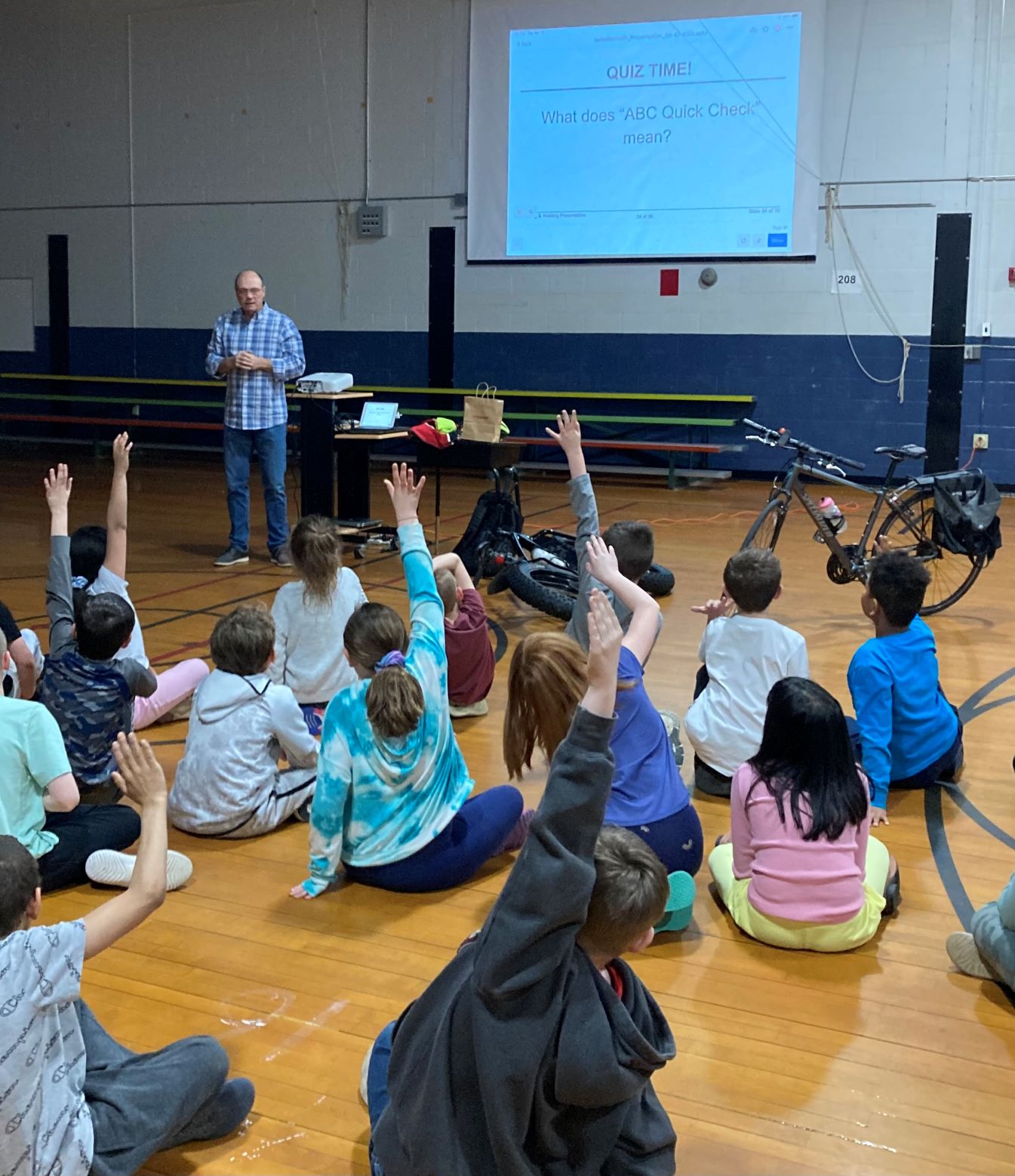
    If you want to learn how to become a bicyclist who is confident and well-educated on behaviors that will keep you safe, consider taking one or more of the Cycling Savvy classes. The full CyclingSavvy Course includes these 3 sessions: the “Truth & Techniques” classroom session, the “Train Your Bike” bike handling session, and their signature on-road group ride experience “Tour of Portland”.

    Completion of the “Train Your Bike” bike handling and the “Truth & Techniques” classroom session is required before taking the tour session.

    The Tour of Portland is an experiential tour of our city’s roads. The course includes some of the most intimidating road features a cyclist might find in their travels. The students travel as a group, stopping to survey and discuss each exercise location. After observing the feature, discussing the traffic dynamics and the best strategy for safe and easy passage, the students ride through individually and regroup at a nearby location.

  • SNHPC Promotes Bike Month Activities

    SNHPC Promotes Bike Month Activities

    The Southern New Hampshire Planning Commission has partnered with organizations like Bike-Walk Alliance, the Queen City Bike Collective, the Manchester Transit Authority and more to promote a variety of biking activities happening in the southeastern NH region for Bike Month. (more…)

  • CommuteSmart Statewide Challenge

    CommuteSmart Statewide Challenge

    This May, organizations across the state are competing to log the most sustainable trips to work while earning individual rewards and a shot at raffle prizes. It’s a great way for organizations to work towards sustainability goals and promote comradery. (more…)

  • Outdoor Gear Library opens in The White Mountains

    Outdoor Gear Library opens in The White Mountains

    Gear Libraries are a rapidly growing trend in the outdoor industry, and now the White Mountains has one of its own! Bethlehem Trails Association opened The Gear Library in February, the first of its kind in The White Mountains. (more…)

  • Strong Towns Design for All, Not Just Cars

    Strong Towns Design for All, Not Just Cars

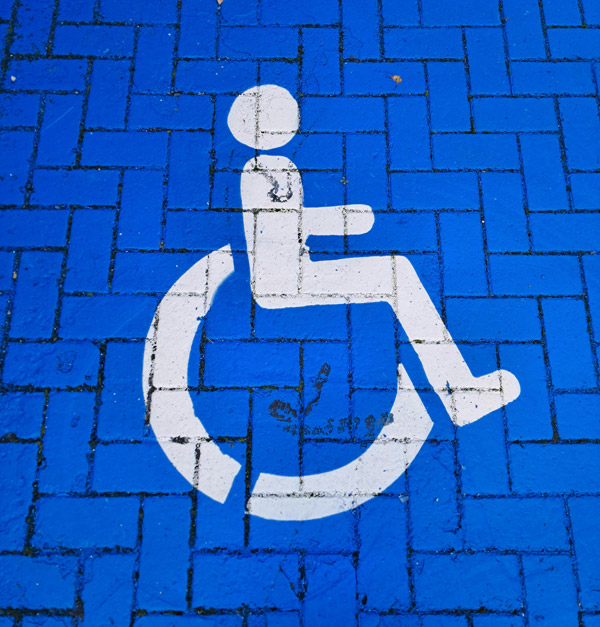
    We saw a bumper sticker, Twitter post, or something to the effect of, “If your commitment to diversity doesn’t include people with disabilities, you are doing it wrong.” We couldn’t agree more. (more…)

  • Bike Ped Fatality Data from PBIC

    Bike Ped Fatality Data from PBIC

    In 2019* there were 6,205 pedestrians, 846 bicyclists, and 287 other non-motorists (e.g. persons riding micromobility devices) killed in crashes with motor vehicles in the United States. Together these road users account for a growing share of total US traffic fatalities: in 2010, pedestrians, bicyclists, and other non-motorists represented 15.5 percent of total traffic fatalities, and in 2019 they accounted for 20.3 percent of fatalities.

    Non-motorist fatalities increased by 43.6 percent in the ten-year period between 2010 and 2019. During that same time period, total traffic fatalities increased by 9.4 percent.

    *National Highway Traffic Safety Administration. (2021, September 02). Fatality Analysis Reporting System (FARS): 2005-2018 Final File and 2019 Annual Report File (ARF). Version 4.0. Retrieved October 19, 2021, from https://cdan.dot.gov/query.

    At a national level, the majority of pedestrian fatalities (73.3 percent) and bicyclist fatalities (62.0 percent) occur at non-intersections.

    Lighting conditions are a major factor in pedestrian fatalities: 75.1 pedestrian fatalities nationwide occur in dark conditions. By contrast, 48.0 percent of bicyclist fatalities occur in dark conditions. Time of day plays a role in this as well. The hours from 6:00pm to 9:00pm tend to account for more pedestrian and bicyclist fatalities than other times of day.

    Though there is not an official accounting of total crashes involving pedestrians and bicyclists or injuries sustained by these road users at the national level, there are estimates each year from the Crash Report Sampling System (CRSS). Studies have shown that pedestrian and bicyclist fatalities represent only the “top of the iceberg” with respect to all crashes involving these modes. Furthermore, research has demonstrated consistent underreporting of crashes involving pedestrians and bicyclists, so as many as 44-75 percent of pedestrian crashes and 7-46 percent of bicyclist crashes may be missing from police-reported crash data. In a recent study examining North Carolina pedestrian crash characteristics, investigators found that for each pedestrian fatality, 17 pedestrians were reported to have been involved in a non-fatal motor vehicle crash and 24 pedestrians were treated for their injuries in an emergency department setting.

    Where to Find Data